
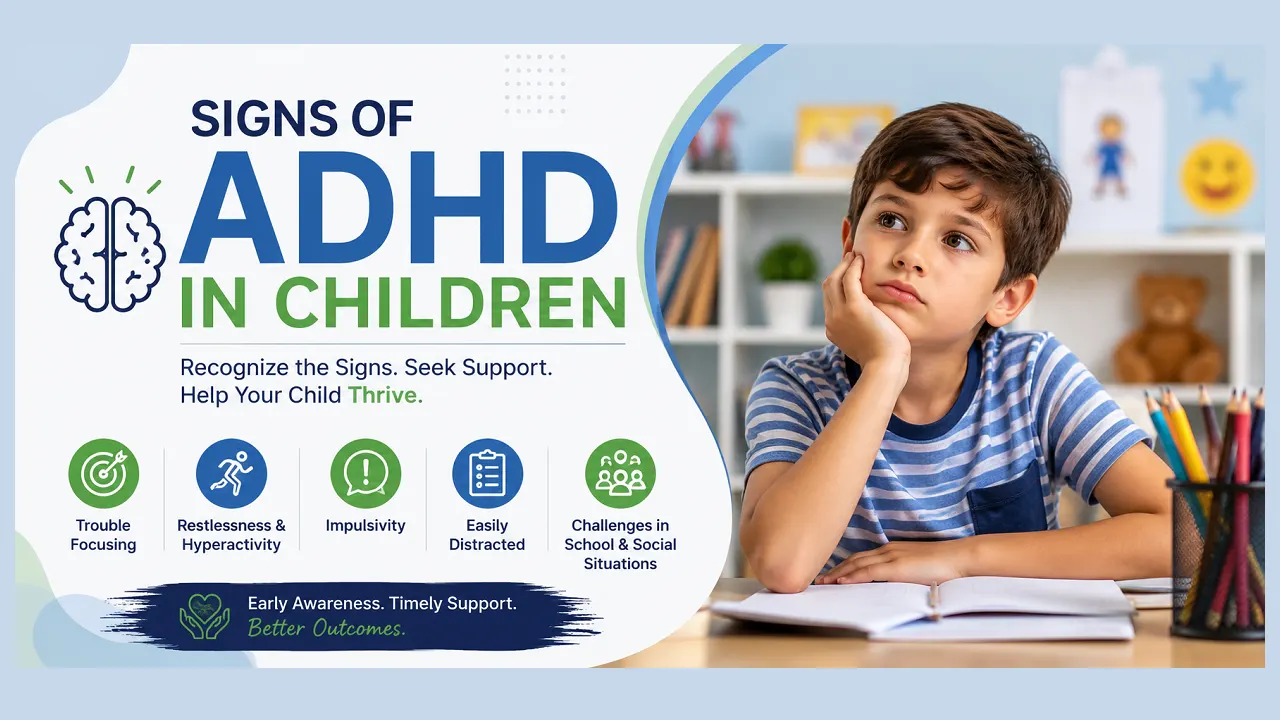
Signs of ADHD in Children
If you are noticing changes in your child’s attention, activity level, or behavior, you may be wondering about the signs of ADHD in children. Attention-deficit/hyperactivity disorder (ADHD) can affect a child’s ability to focus, control impulses, manage activity levels, and succeed at school or in social situations.
Recognizing possible ADHD symptoms early can help parents seek an appropriate professional evaluation and understand the support their child may need.
Common Signs of ADHD in Children
The signs of ADHD in children generally involve inattention, hyperactivity, and impulsivity. Symptoms can vary from child to child, and not every child with occasional distractibility or high energy has ADHD.
Signs of Inattention
A child experiencing significant inattention may:
- Have difficulty staying focused on tasks or conversations
- Frequently make careless mistakes
- Seem not to listen when spoken to directly
- Struggle to organize schoolwork or daily activities
- Often lose school supplies, toys, or other important items
- Become easily distracted
- Forget everyday responsibilities or instructions
- Have difficulty completing tasks that require sustained mental effort
Signs of Hyperactivity and Impulsivity
Other common ADHD symptoms in children can include:
- Frequently fidgeting or having difficulty sitting still
- Running, climbing, or moving excessively when it is inappropriate
- Talking more than expected
- Interrupting conversations or activities
- Having difficulty waiting for a turn
- Acting before thinking about the consequences
- Appearing constantly “on the go”
The American Academy of Pediatrics recommends considering an ADHD evaluation when children or adolescents have academic or behavioral concerns along with symptoms of inattention, hyperactivity, or impulsivity. A proper evaluation also considers whether symptoms cause impairment in more than one setting, such as home and school.
When Should Parents Seek an ADHD Evaluation?
Occasional forgetfulness, restlessness, or difficulty paying attention is normal for many children. Concern may be greater when symptoms are persistent, interfere with everyday functioning, and affect school performance, relationships, or family life.
An ADHD evaluation should also consider other conditions that may produce similar symptoms or occur alongside ADHD, including learning or developmental concerns, anxiety, depression, sleep problems, or other behavioral conditions.
How Is ADHD Diagnosed in Children?
There is no single test that can determine whether a child has ADHD. A qualified healthcare professional reviews the child’s developmental history, behavior, functioning, and symptoms. Information from parents, teachers, school personnel, and other professionals may help create a clearer picture of how the child functions in different environments.
If you recognize several signs of ADHD in children, consider discussing your concerns with a qualified mental health professional rather than attempting to diagnose your child based on an online checklist.
Get Support for Your Child
Understanding the signs of ADHD in children is an important first step. At Carolinas Psychiatric Institute, families can seek professional guidance when concerns about attention, behavior, impulsivity, or school performance arise. An individualized evaluation can help clarify your child’s needs and identify appropriate next steps.
Contact Carolinas Psychiatric Institute to learn more about child and adolescent mental health services and schedule an evaluation.
Frequently Asked Questions About Signs of ADHD in Children
What are the most common signs of ADHD in children?
Common signs include difficulty maintaining attention, forgetfulness, disorganization, excessive activity, fidgeting, interrupting, difficulty waiting, and impulsive behavior. Symptoms vary between children and should be evaluated in the context of the child’s overall development and functioning.
At what age can ADHD symptoms appear?
ADHD symptoms can be recognized during childhood, but diagnosis requires a comprehensive evaluation. The American Academy of Pediatrics provides guidance for evaluating children and adolescents from age 4 through the 18th birthday.
Does being easily distracted mean my child has ADHD?
Not necessarily. Children can become distracted because of many factors, including normal development, stress, sleep difficulties, learning challenges, anxiety, or other conditions. ADHD requires a professional evaluation rather than a diagnosis based on one symptom.
Can ADHD symptoms occur at home and school?
Yes. For an ADHD diagnosis, clinicians consider whether symptoms and impairment occur in more than one major setting. Information from parents, teachers, and other caregivers can therefore be important during an evaluation.
What should I do if I notice signs of ADHD in my child?
If symptoms are persistent or interfering with school, relationships, or daily life, talk with a qualified healthcare or mental health professional. A professional evaluation can help determine whether ADHD or another condition may be contributing to the concerns.