NeuroStar Advanced TMS Therapy Charlotte
If depression continues despite trying antidepressant medication, NeuroStar Advanced TMS Therapy Charlotte may provide another treatment option to discuss with a qualified mental health professional. Transcranial magnetic stimulation (TMS) is a non-invasive, non-drug treatment that uses focused magnetic pulses to stimulate areas of the brain involved in mood regulation. NeuroStar Advanced Therapy is FDA-cleared for treating depressive episodes in adults with Major Depressive Disorder (MDD) who have not achieved satisfactory improvement from previous antidepressant medication treatment.
What Is NeuroStar Advanced TMS Therapy?
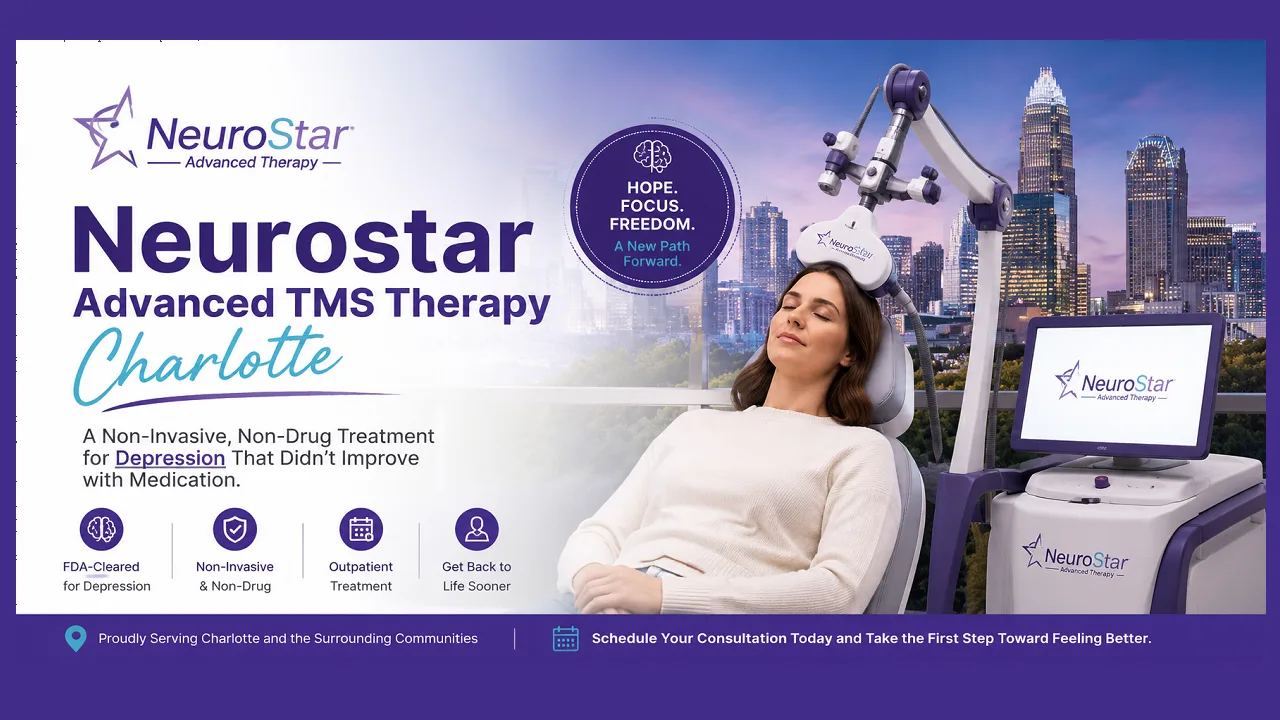
NeuroStar Advanced Therapy is an outpatient TMS treatment designed to target specific areas of the brain associated with depression. Unlike medication, TMS does not require a drug to circulate throughout the body. Unlike electroconvulsive therapy (ECT), it does not require general anesthesia or induce a seizure.
During a treatment session, a NeuroStar system delivers precisely targeted magnetic pulses while you remain awake and alert. NeuroStar describes the treatment as non-invasive and non-drug, with patients generally able to return to their regular activities after sessions.
Who May Benefit From TMS in Charlotte?
NeuroStar TMS may be considered for adults diagnosed with Major Depressive Disorder who have not experienced satisfactory improvement from antidepressant medication during their current depressive episode. A psychiatric evaluation is necessary to determine whether TMS is appropriate for your individual circumstances.
TMS may be especially worth discussing when depression symptoms continue to interfere with work, relationships, sleep, motivation, or everyday activities despite previous treatment attempts.
What Happens During NeuroStar TMS Treatment?
NeuroStar treatment is performed in an outpatient clinical setting. You remain awake during the session while the treatment device delivers magnetic stimulation to the targeted region of the brain.
NeuroStar reports a typical course of treatment as 36 sessions, generally delivered five days per week for approximately six weeks, followed by taper sessions. Individual treatment plans can vary according to the patient’s clinical needs and the treating clinician’s recommendations.
Is NeuroStar TMS Safe?
NeuroStar is a non-invasive treatment and does not require sedation or anesthesia. The manufacturer reports that common side effects can include temporary scalp discomfort or headache. As with any medical treatment, TMS may not be appropriate for everyone, so a qualified clinician should review your medical history and treatment goals before therapy begins.
NeuroStar Advanced TMS Therapy in Charlotte
Choosing TMS treatment is an important decision. A Charlotte-area consultation can help you understand whether NeuroStar Advanced Therapy is appropriate for your depression, what the treatment schedule may look like, and whether your insurance plan may provide coverage.
If depression has not improved enough with previous treatment, ask a qualified mental health professional whether NeuroStar Advanced TMS Therapy Charlotte could be an appropriate next step. Schedule a consultation to discuss your symptoms, treatment history, eligibility, and personalized options.
Frequently Asked Questions of Neurostar Advanced TMS Therapy Charlotte
What is NeuroStar Advanced TMS Therapy?
NeuroStar Advanced Therapy is a non-invasive, non-drug TMS treatment that uses focused magnetic pulses to stimulate nerve cells in areas of the brain involved in mood regulation.
Who is a candidate for NeuroStar TMS?
It may be considered for adults with Major Depressive Disorder who have not achieved satisfactory improvement from previous antidepressant medication treatment. A clinician must determine whether it is appropriate for you.
How long does NeuroStar TMS treatment take?
A typical NeuroStar treatment course consists of 36 sessions over approximately six weeks, although the treatment plan can vary by patient.
Does NeuroStar TMS require anesthesia?
No. NeuroStar TMS is performed while the patient is awake and does not require sedation or general anesthesia.
Can I return to normal activities after TMS?
NeuroStar states that patients can generally resume normal activities after treatment because the therapy does not require anesthesia or a recovery period.
Is NeuroStar TMS covered by insurance?
Insurance coverage varies by plan and individual eligibility. Patients should verify benefits and authorization requirements with their insurance provider and TMS clinic before beginning treatment.